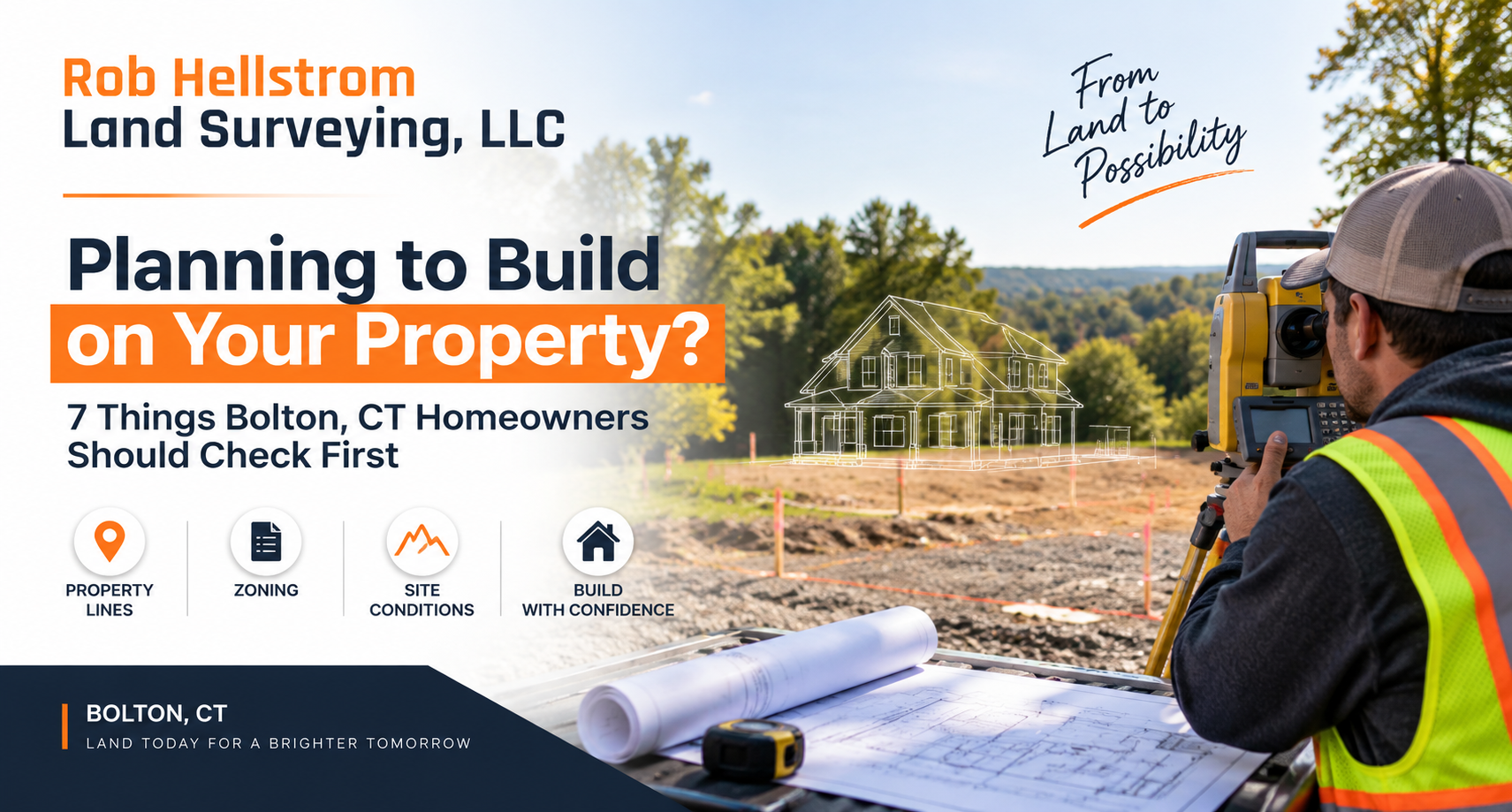
Building a new home, garage, addition, driveway, or other structure can be an exciting investment. But before choosing finishes or scheduling construction, homeowners need to understand the land itself. Every property has boundaries, slopes, drainage patterns, access points, and local requirements that can affect what can realistically be built.
For homeowners in Bolton, Connecticut, checking these details early can help reduce redesigns, delays, and unexpected expenses. Rob Hellstrom Land Surveying notes that site planning may consider boundaries, topography, utilities, drainage, access, and overall feasibility before construction moves forward. Here are seven important things to consider before starting your project.
1. Confirm Your Property Boundaries
Knowing exactly where your property begins and ends is an important first step. Do not assume that a fence, driveway, tree line, or lawn edge represents the actual property boundary.
A boundary survey can help clarify property lines and provide accurate information before deciding where a new structure should be located. This can be particularly important when planning improvements near neighboring properties.
Companies such as Rob Hellstrom Land Surveying, LLC provide boundary surveys along with other surveying services for residential and commercial properties.
2. Understand the Shape and Elevation of the Land
A property may appear relatively flat when you walk across it, but small elevation changes can have a significant impact on construction.
Topographic surveys document the shape and elevation of the land along with visible natural and constructed features. This information can help architects, engineers, and contractors understand site conditions before designing a project.
Slopes can influence grading, drainage, driveway placement, foundation planning, and the overall layout of a proposed improvement. Understanding them early gives the project team better information to work with.
3. Check Zoning and Local Requirements
Owning a piece of land does not necessarily mean you can build anything anywhere on it. Local zoning and development requirements can affect setbacks, lot use, access, and other parts of a project.
Before finalizing a design, homeowners should confirm which current requirements apply to their particular property and proposed improvement.
This is one reason early planning matters. Identifying restrictions before detailed design or construction begins can be much easier than changing plans after significant time and money have already been invested.
4. Pay Attention to Drainage and Stormwater
Water is an important part of site planning that homeowners can easily overlook.
A new building, driveway, patio, or other improvement may change how rainwater moves across a property. Poorly planned grading or drainage could potentially create unwanted water accumulation or erosion.
Rob Hellstrom Land Surveying’s listed civil engineering services include hydrology, stormwater runoff management, grading, and erosion and sediment control. Evaluating these issues before construction can help the project account for how water currently moves around the site.
5. Consider Septic and Soil Conditions
Properties that rely on an on-site septic system may require additional planning before construction or major property changes.
The location of an existing or proposed septic system can influence where certain improvements can be placed. Soil conditions can also be relevant to site development.
Professional Site development planning Bolton, CT can bring several of these considerations together before construction starts. The company’s surveying and engineering services include septic system design plans, test pits, percolation tests, soil investigations, and feasibility-related work.
6. Look for Easements and Access Issues
An easement generally gives another person or organization certain legal rights to use part of a property for a specific purpose. That can become important when deciding where improvements should be located.
Access deserves attention as well. Think about how vehicles, construction equipment, utilities, and eventually residents or visitors will reach the proposed structure.
For some projects, driveway placement and safe vehicle access can become important parts of the overall site design. Considering them at the beginning can prevent the building design from conflicting with practical access needs later.
7. Find Out Whether the Project Is Feasible Before Designing It
One of the biggest mistakes homeowners can make is becoming committed to a particular design before understanding what the property can support.
A beautiful plan may need to change if the proposed location conflicts with boundaries, slopes, drainage conditions, access needs, environmental considerations, or applicable development requirements.
Land-use planning services can include concept planning, feasibility work, subdivision plans, applications, and permitting assistance. Reviewing feasibility first allows the design to respond to the actual property rather than assumptions about it.
Why Early Planning Matters
Construction problems do not always begin during construction. Missing site information or unresolved permit and planning issues can create delays before equipment even reaches the property.
That is why homeowners should think of surveying and site planning as part of the foundation of the project. Accurate information can help surveyors, engineers, designers, contractors, and property owners make decisions using the same understanding of the site.
Final Thoughts
Before building on your Bolton, CT property, look beyond the structure itself. Property boundaries, topography, zoning, drainage, septic and soil conditions, easements, access, and overall feasibility can all influence the project.
Checking these factors early does not mean every property will have a problem. It simply gives homeowners better information before making major decisions. When the land is understood first, the design and construction process can begin on a much clearer foundation.